

Midsommar, incoming
How we celebrate Midsommar, what it actually looks like, what we wear and what we put on the table

The Swedish holiday Midsommar arrives at full speed, usually in the middle of everything else you were trying to finish before summer.
One week you’re wrapping up the school year, fielding end-of-term performances, class parties and recorder recitals (if you know, you know). The next, someone is asking what your Midsommar plans are and you realize you haven’t thought that far ahead because you’ve been in cram-everything-in-before-summer mode since April.
And somehow, Midsommar always arrives before you feel ready for it.
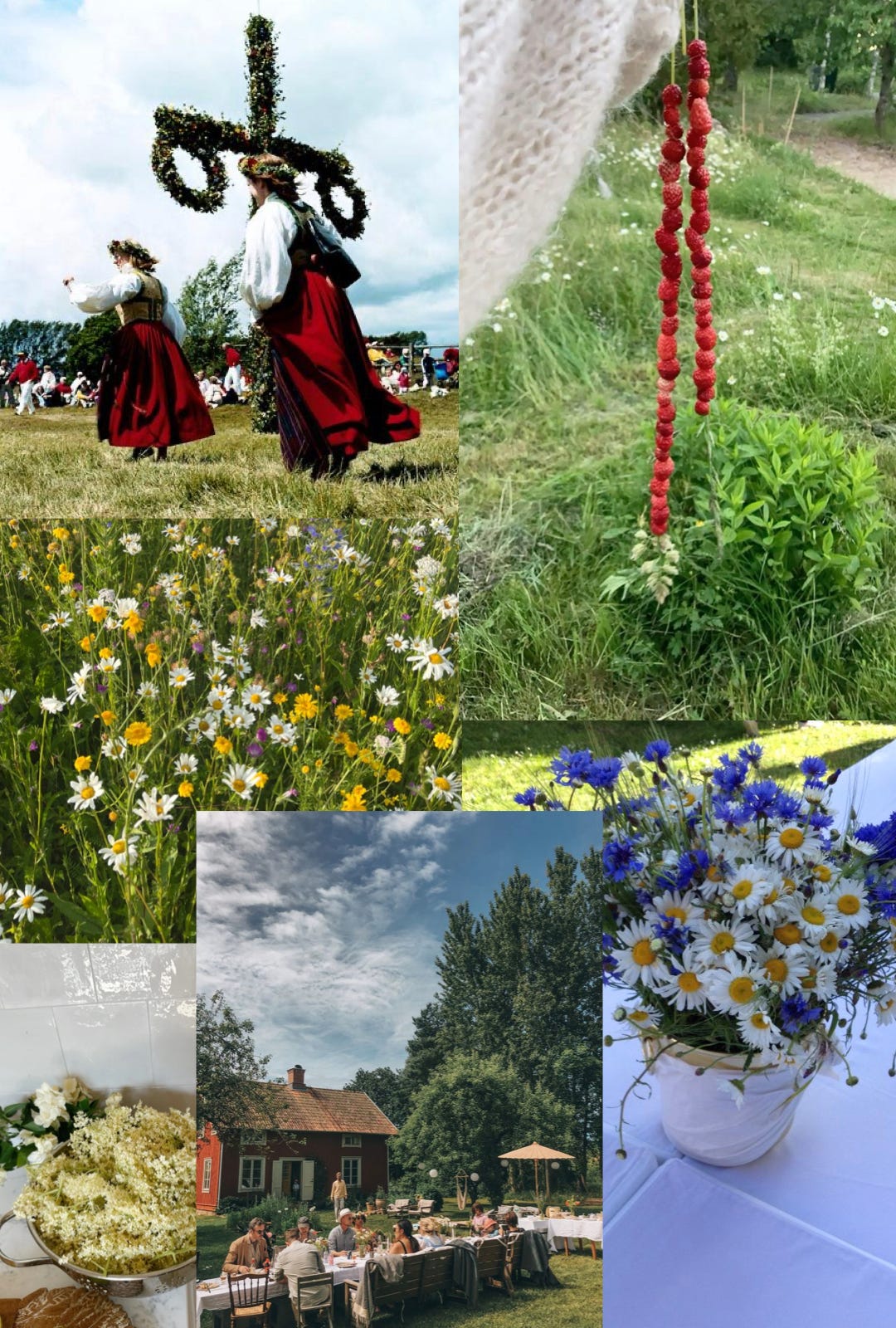
I’ve been celebrating Midsommar for over twenty years now (remember, I was not born in Sweden) and my relationship with it has always looked a bit different.
In my early twenties in Stockholm, it was long evenings and outdoor dancing with my then-boyfriend-now-husband and the particular kind of magic that comes from a Swedish summer night that never fully gets dark.
Now, with kids and the particular kind of logistics that come with them, it’s become a bit more low-key.
Most years, we keep it simple. Stockholm, just us. Sometimes Skansen in the morning, which with children is perfect right at opening. The dancing around the midsommarstång, the flower crowns the kids can make, the feeling of participating in something that has been happening in this city for a very long time.
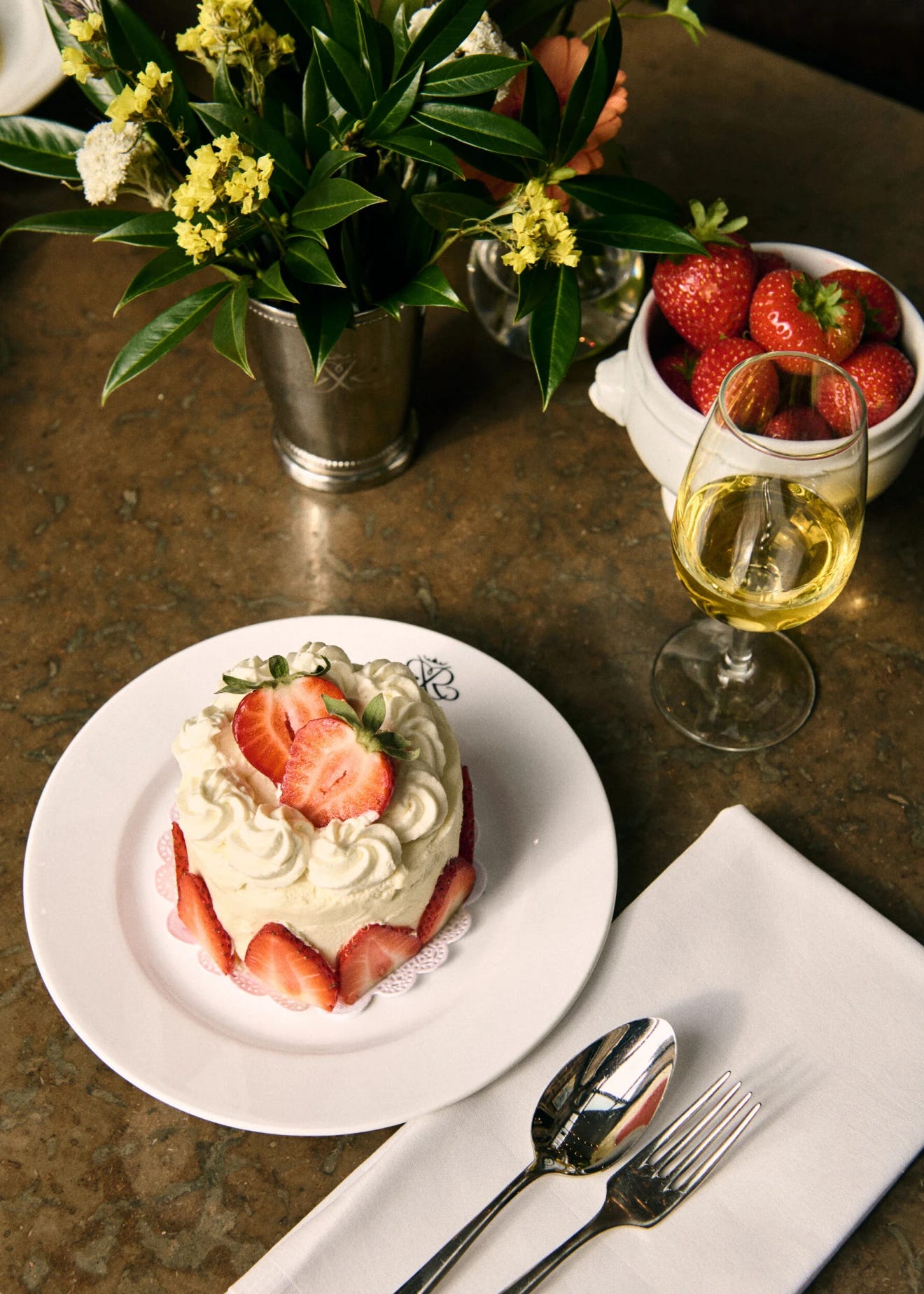
Then lunch at home. A properly set table, good food, some summery flowers. Some kind of strawberry dessert that the children demolish before anyone else gets to it.
It might sound a bit boring from the outside. To me it feels exactly right for where we are in life. When the kids are older, it will look different again.
This year is a little different. My brother and his daughters are landing from Singapore early on Midsummer’s Eve. So we’ll celebrate with them, and while we can’t offer the most over-the-top Midsommar imaginable, we’ll make it as great as possible for their jet-lagged bodies.
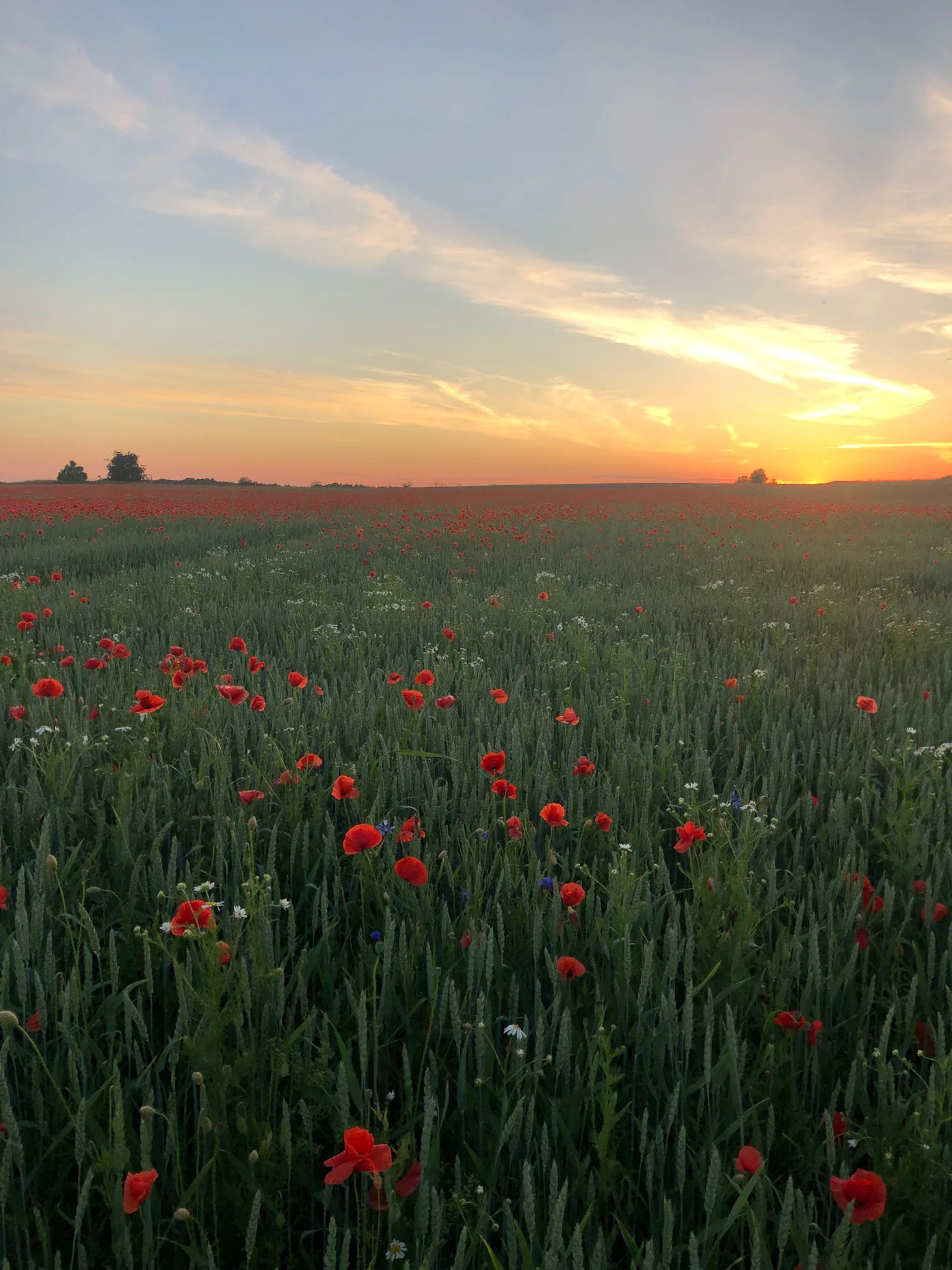
For many, Midsommar means big get-togethers, either with a large group of friends and friends of friends, or the same group they’ve celebrated with since they were teenagers. Some people celebrate with immediate family only. Everyone kind of does it their own way.
In many ways, it’s similar to how Americans celebrate the Fourth of July. There are traditions, and then there are the traditions that grow.
While loads of people celebrate Midsommar in the city, many end up in the countryside at someone’s house, in the archipelago, or by some body of water. In a way, Midsommar is also a celebration of summer itself and of Swedish nature.
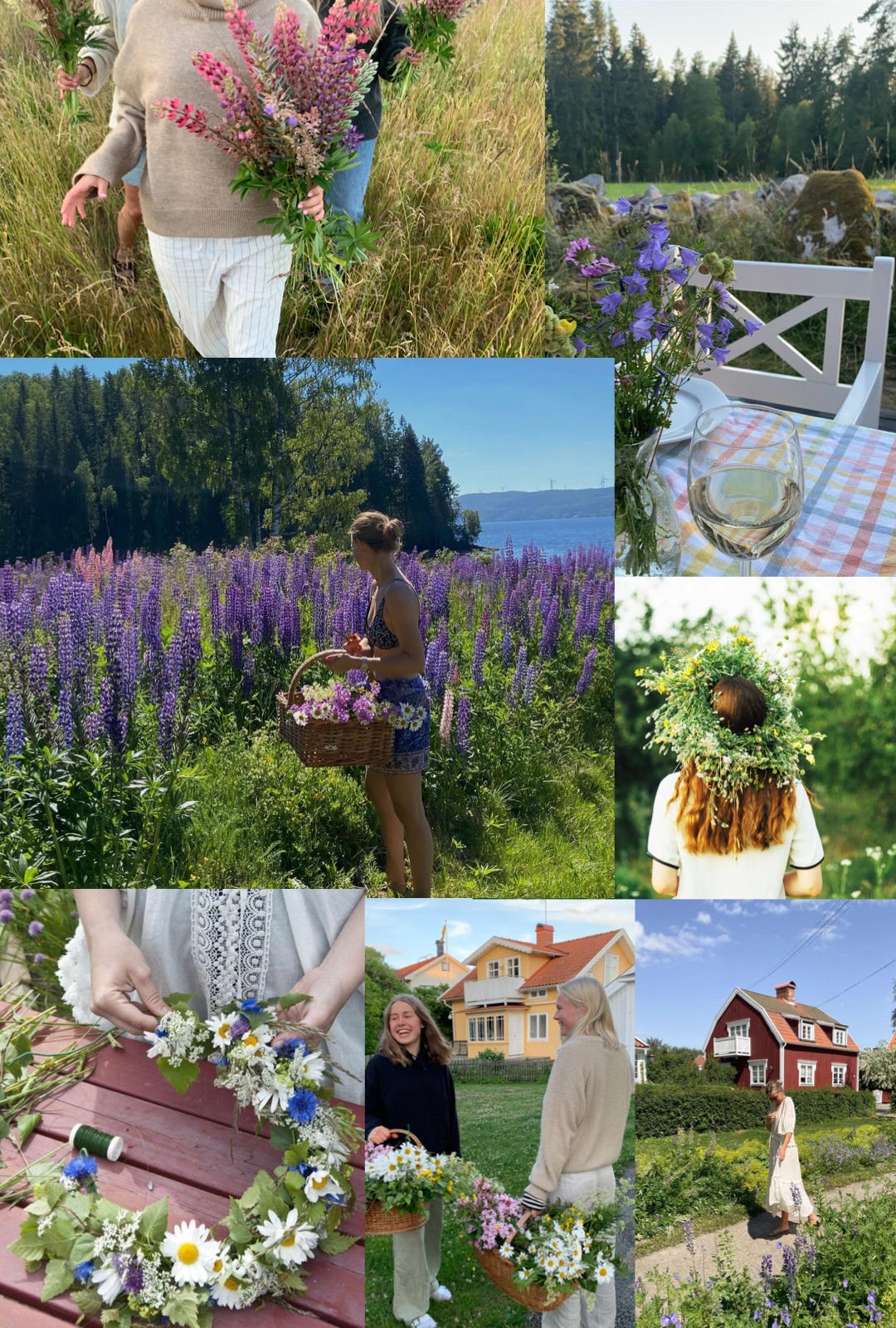
If you ask Swedes, Midsommar feels more like the real national day than Nationaldagen ever has.
What people imagine
A long white dress, bare feet in the grass, flower crowns with wildflowers. A perfectly Pinterest-worthy table set outside under a sky that stays golden until 10pm. Aquavit/snaps. Strawberries heaped in a bowl. Some music in the background. The kind of evening people dream of all year.
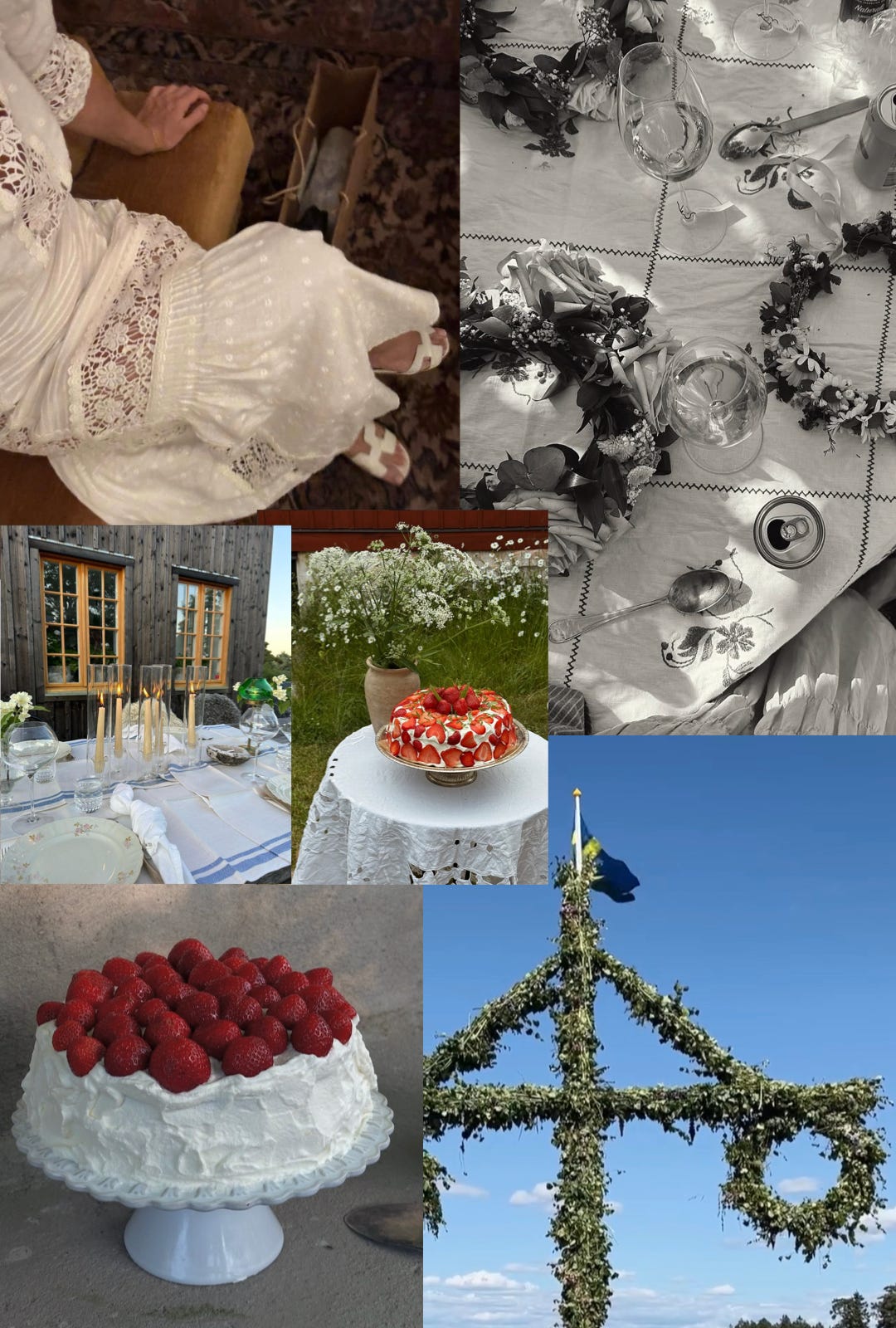
And sometimes, it looks exactly like that. Midsommar is a bit like New Year’s Eve in that way. The idea of it is always slightly more perfect than the reality. You picture the ideal version, and then life — weather, children, logistics — causes it to look different. And it’s usually still lovely. I think being with friends and family over wins it all.
What actually happens
It’s cold by 7pm. The grass is wet from a rain shower or ten. Someone is wearing a parka or anorak over their dress and insisting they’re not cold. The dancing around the midsommarstång happens regardless, because the ritual matters the most.
There is something wonderful about the insistence of celebrating Midsommar whatever the weather does. The same instinct that sends children outside in rain gear in April, that keeps people on their balconies with blankets well into May. You adjust. You add a layer. You stay outside anyway.
The honest version is this: it’s often cold by evening, the grass is almost always damp, and the weather has a way of not cooperating at exactly the moment you’d most like it to. And somehow it’s still one of the best days of the year.
A bit of history
Midsommar is one of Sweden’s most deeply rooted celebrations, and as said above, it is more of a celebration of Sweden than our own National Day in the beginning of June.
In the north of Sweden, locals or those traveling back home to visit still dress in traditional dress that their families have been wearing for generations.
Nerd alert: The holiday predates Christianity in Scandinavia. The original Midsommar celebrations were tied to the summer solstice. Bonfires were lit to ward off evil spirits, and the night was considered a powerful and slightly dangerous threshold. When Christianity arrived, the date was shifted slightly to align with the feast of St John the Baptist, which is why Midsommar falls on the Friday between June 19th and 25th rather than the actual solstice.
Nerd alert: The midsommarstång,which people often call a maypole, is not technically a maypole at all. The name comes from majstång, where maj referred to greenery and branches rather than the month of May. It’s decorated with leaves and flowers and raised as a communal ritual, with everyone dancing around it in circles.
The frog dance, Små Grodorna, is non-negotiable and you will see young and old jumping around like they’ve lost their marbles. But you go all in.
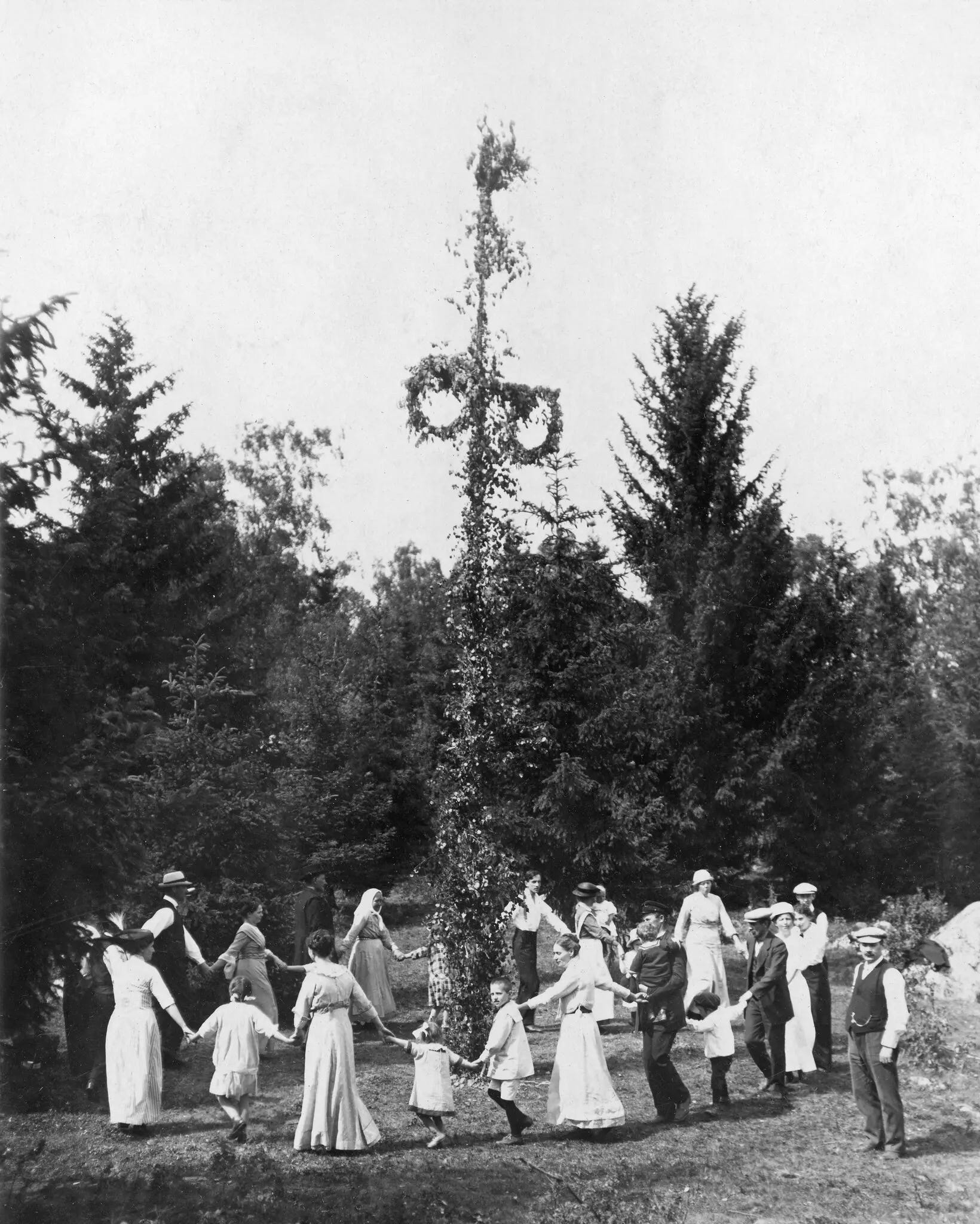
Nerd alert: Midsommar was traditionally considered one of the strongest nights for folk magic. Young women would pick seven different wildflowers and place them under their pillow to dream of their future husband. The dew collected on Midsommar morning was believed to have healing properties.
What we actually wear
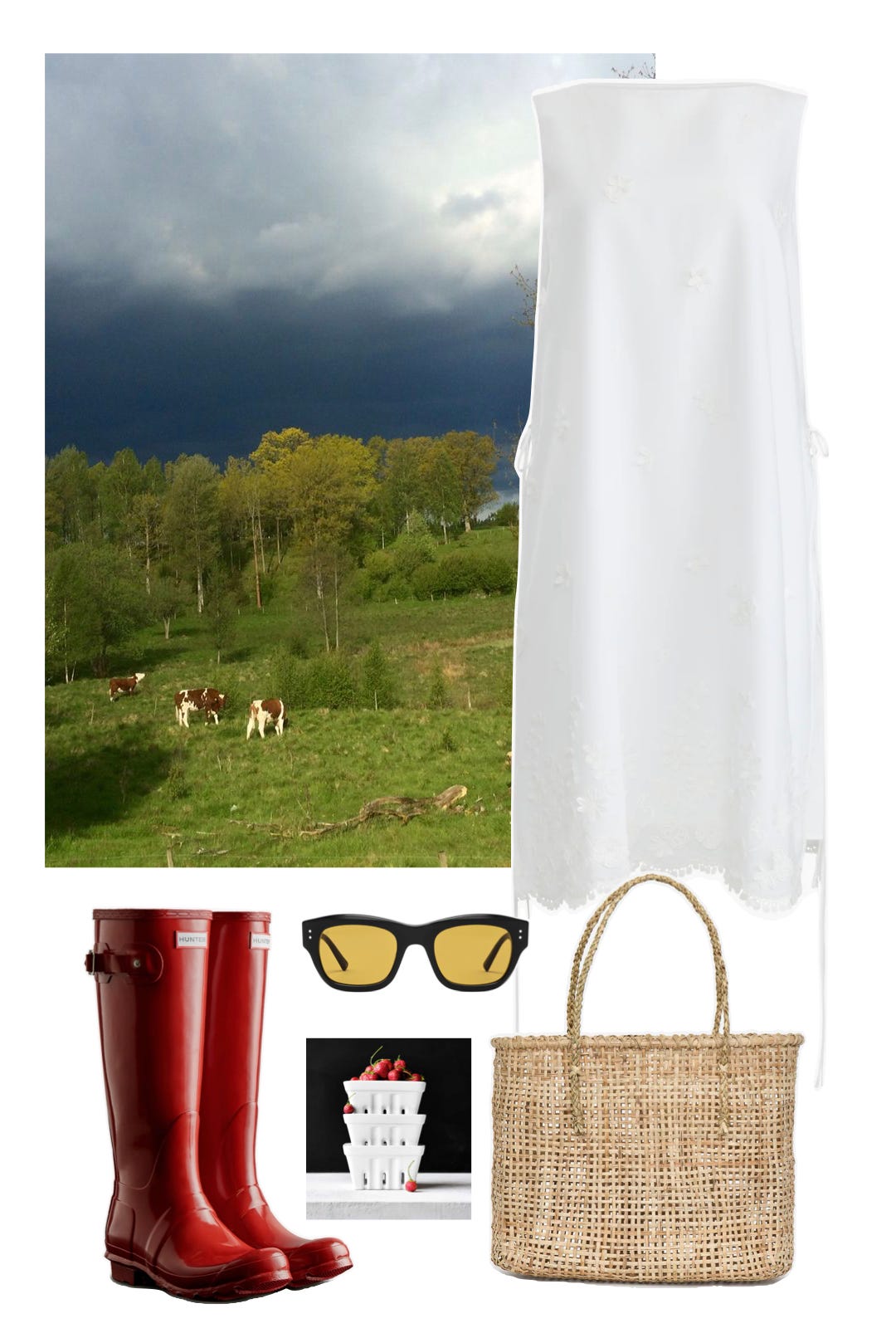
The week leading up to Midsommar is not, in my experience, the time to buy something new specifically for the occasion. What works best is what you already have — pieces that can handle a day outside, still look nice when you sit down to eat, and survive whatever the weather decides to do.
Many wear white, many wear flowery dresses. Most just wear what they feel like. There is no dress code (other than the traditional dress), but if weather allows, you’ll see most of the Swedish girls in summery dresses as we want to take advantage of any days that allow it.
Flat sandals if the weather behaves and sneakers or rainboots (is there anything more chic than a summer dress with wellies?) if it doesn’t. The knit comes regardless — it is a necessity. You will need it by evening.
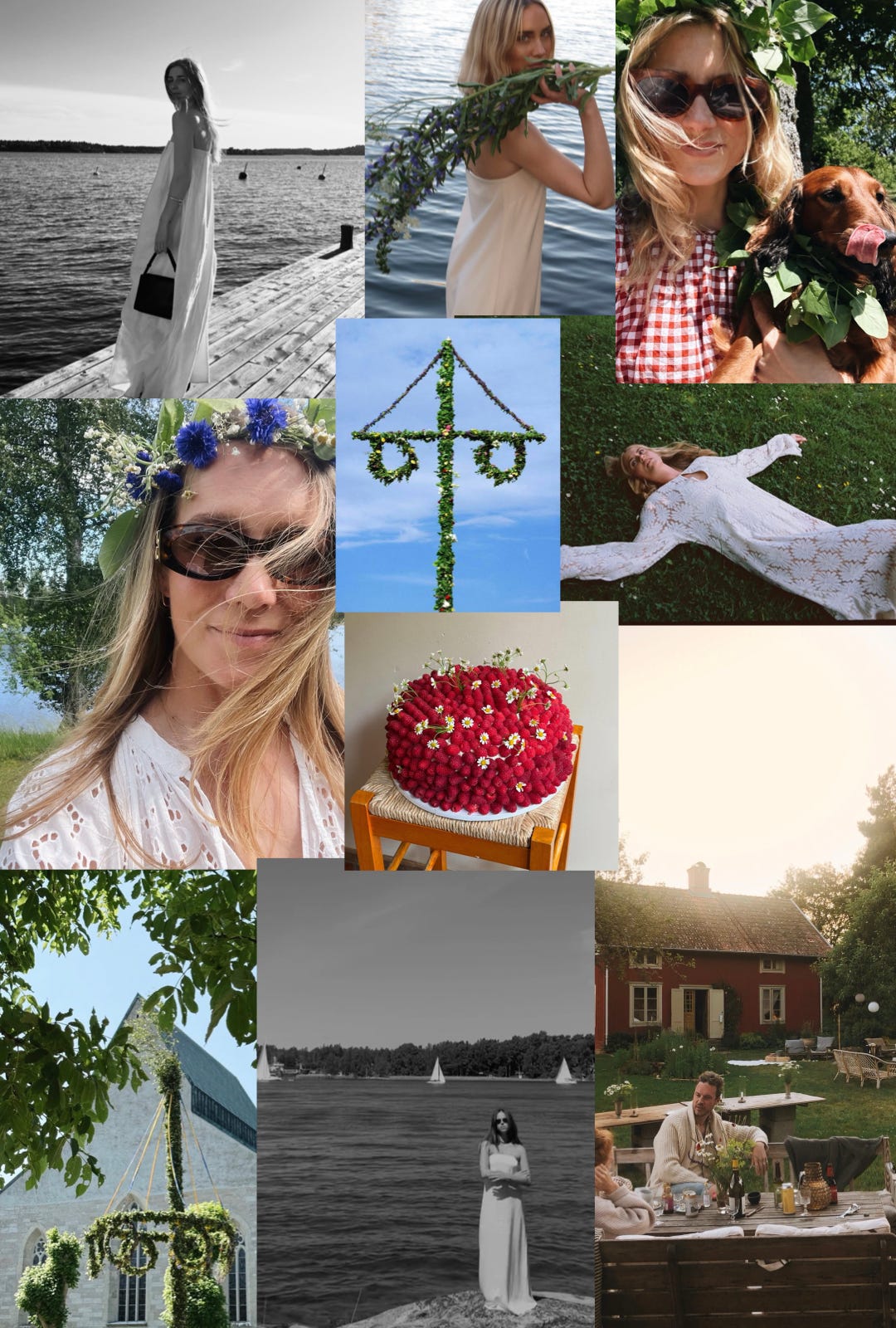
Some people go all out for Midsommar — the full white dress, ordering an elaborate flower crown from their local florist, the whole fantasy — and I love seeing it. There’s something joyful about the people who fully commit to the occasion.
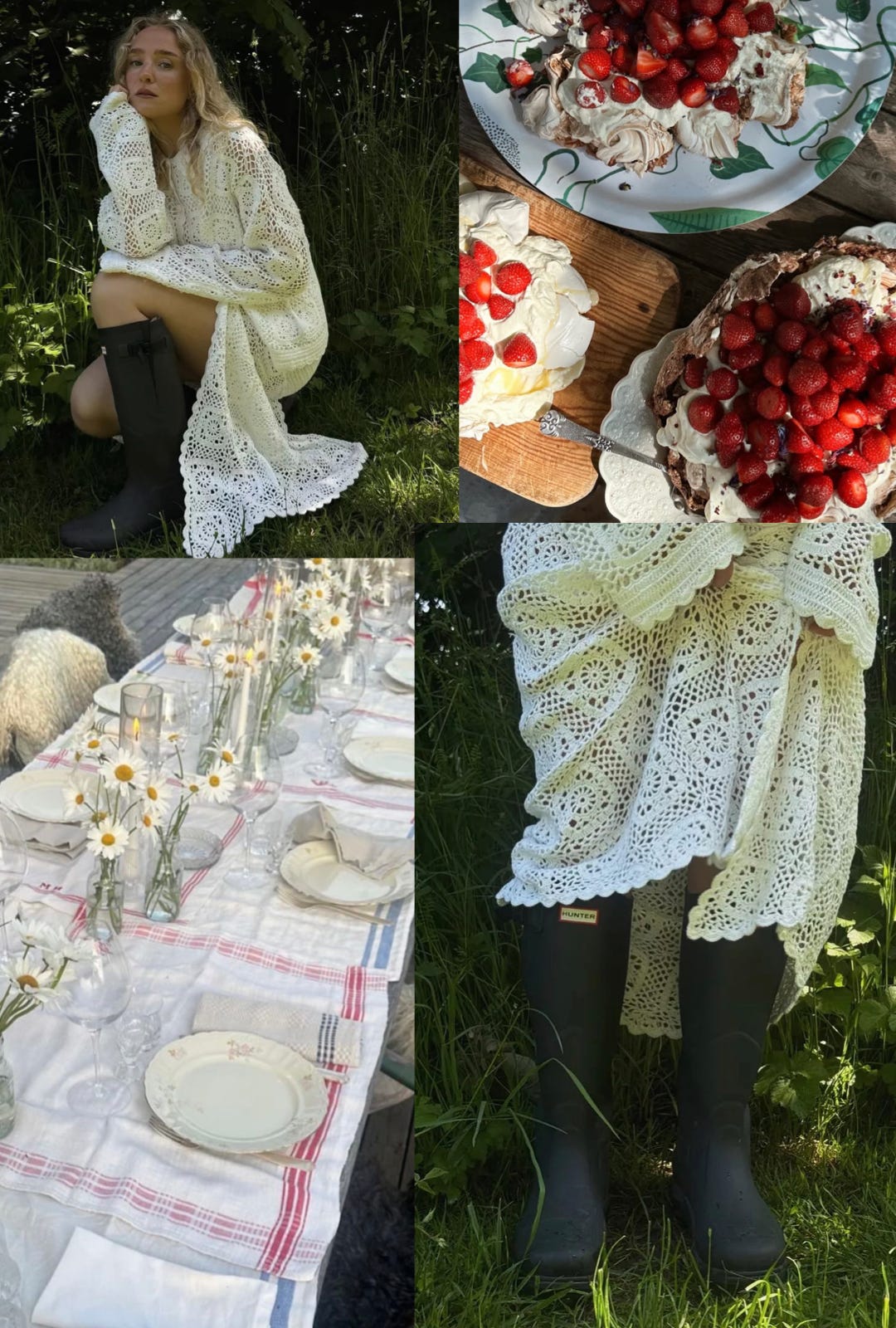
Some inspiration
(A small note before we begin: the below contains affiliate links. More on that at the bottom.)
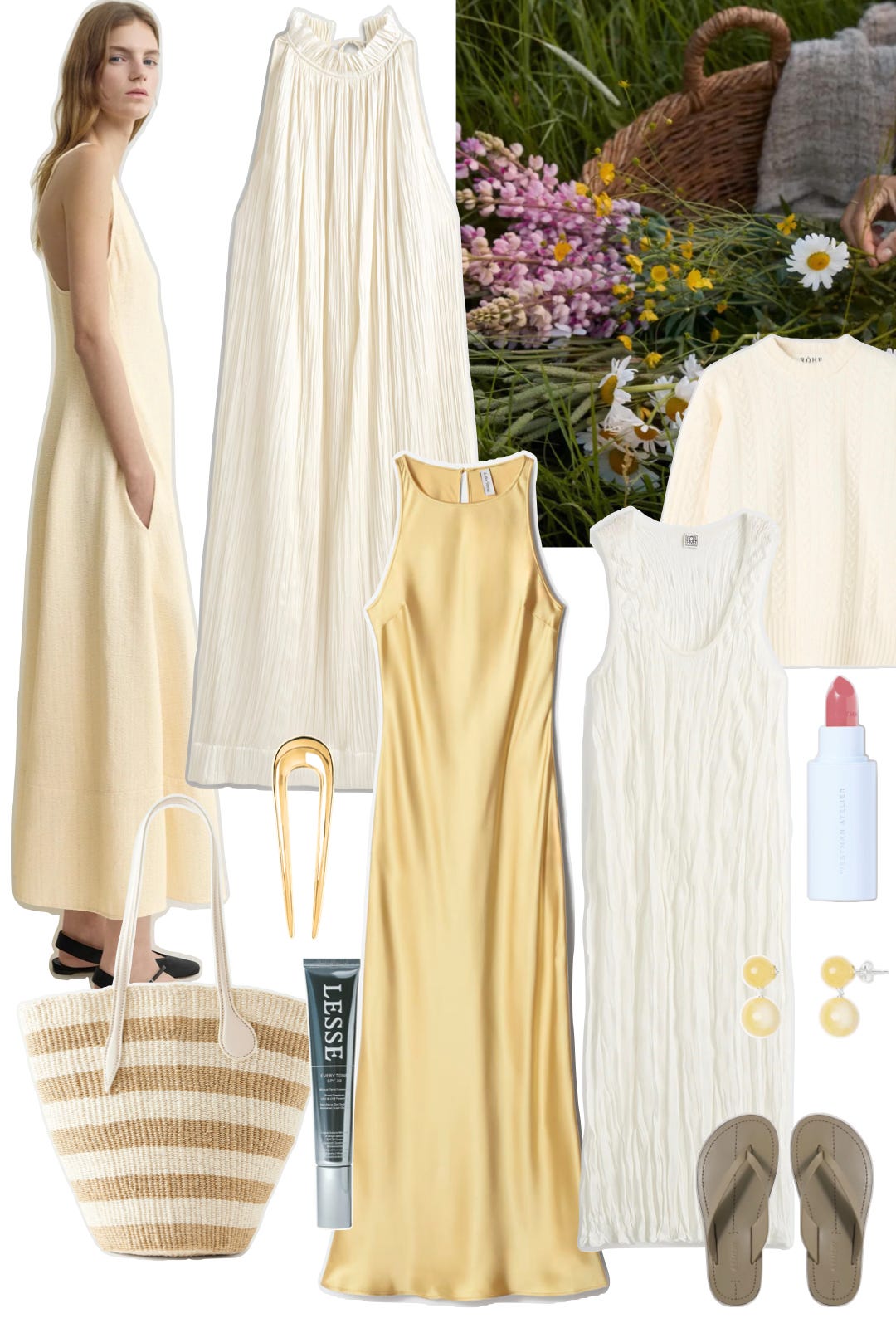
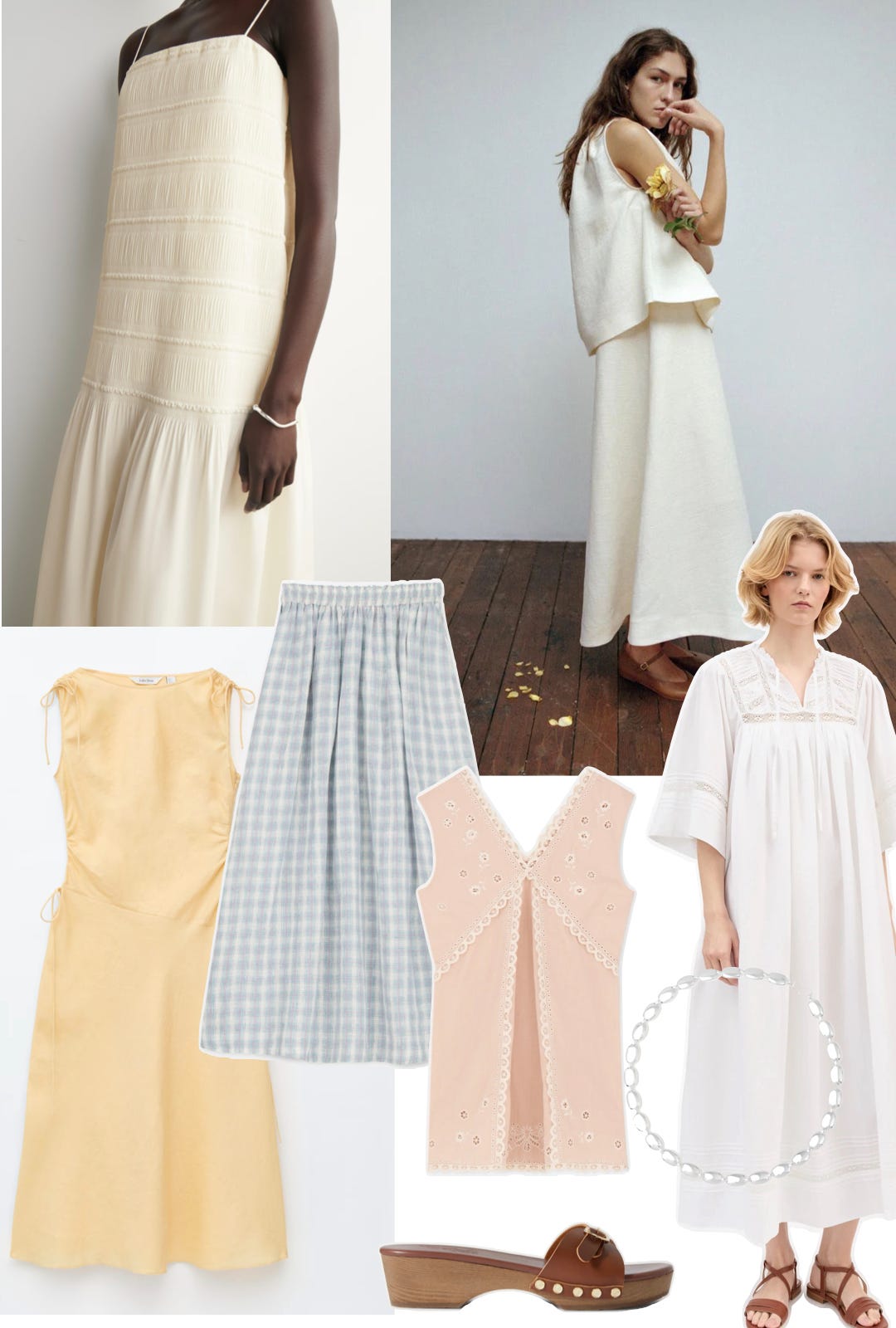
Midsommar, dressed
(The below contains affiliate links. More on that at the bottom.)
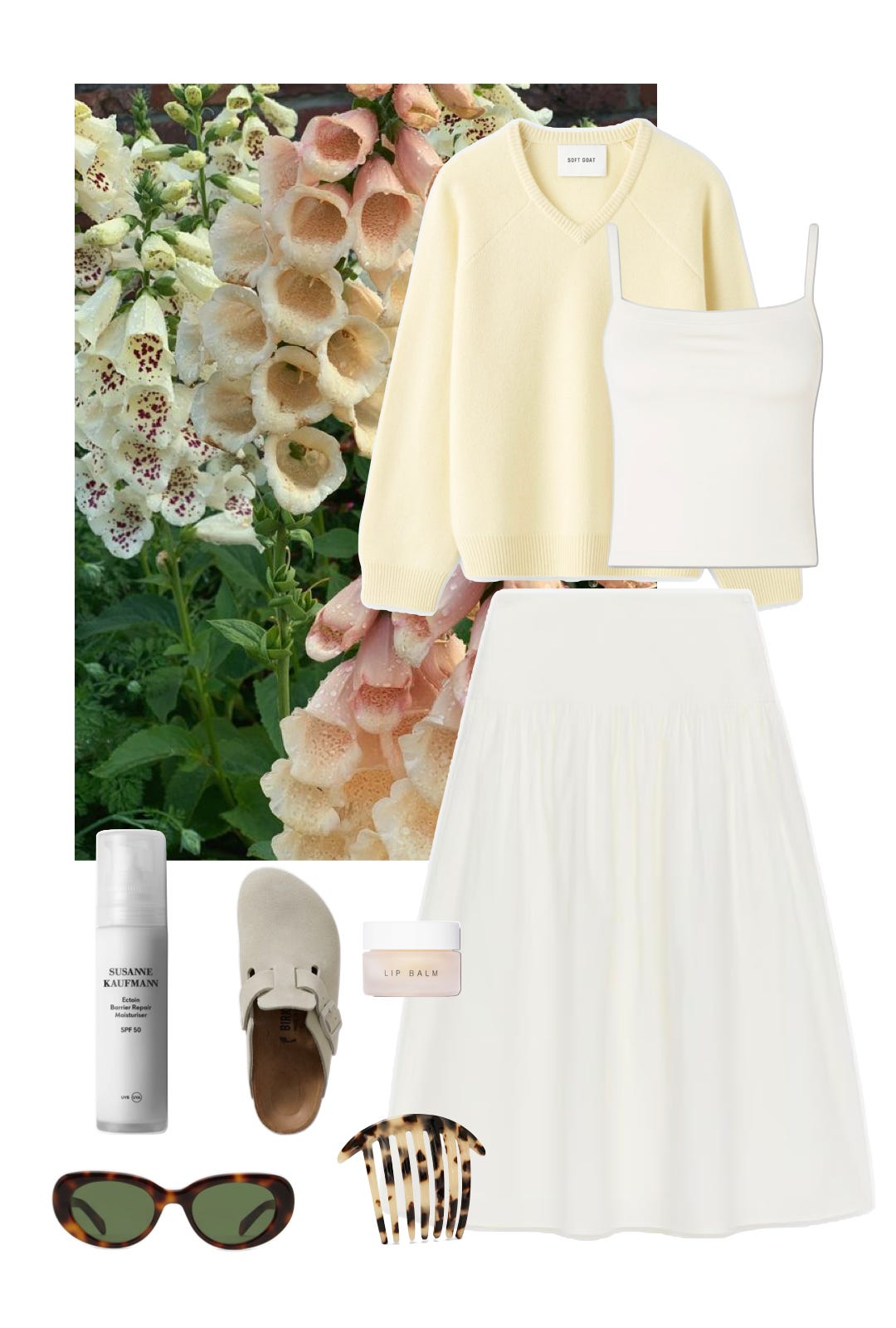
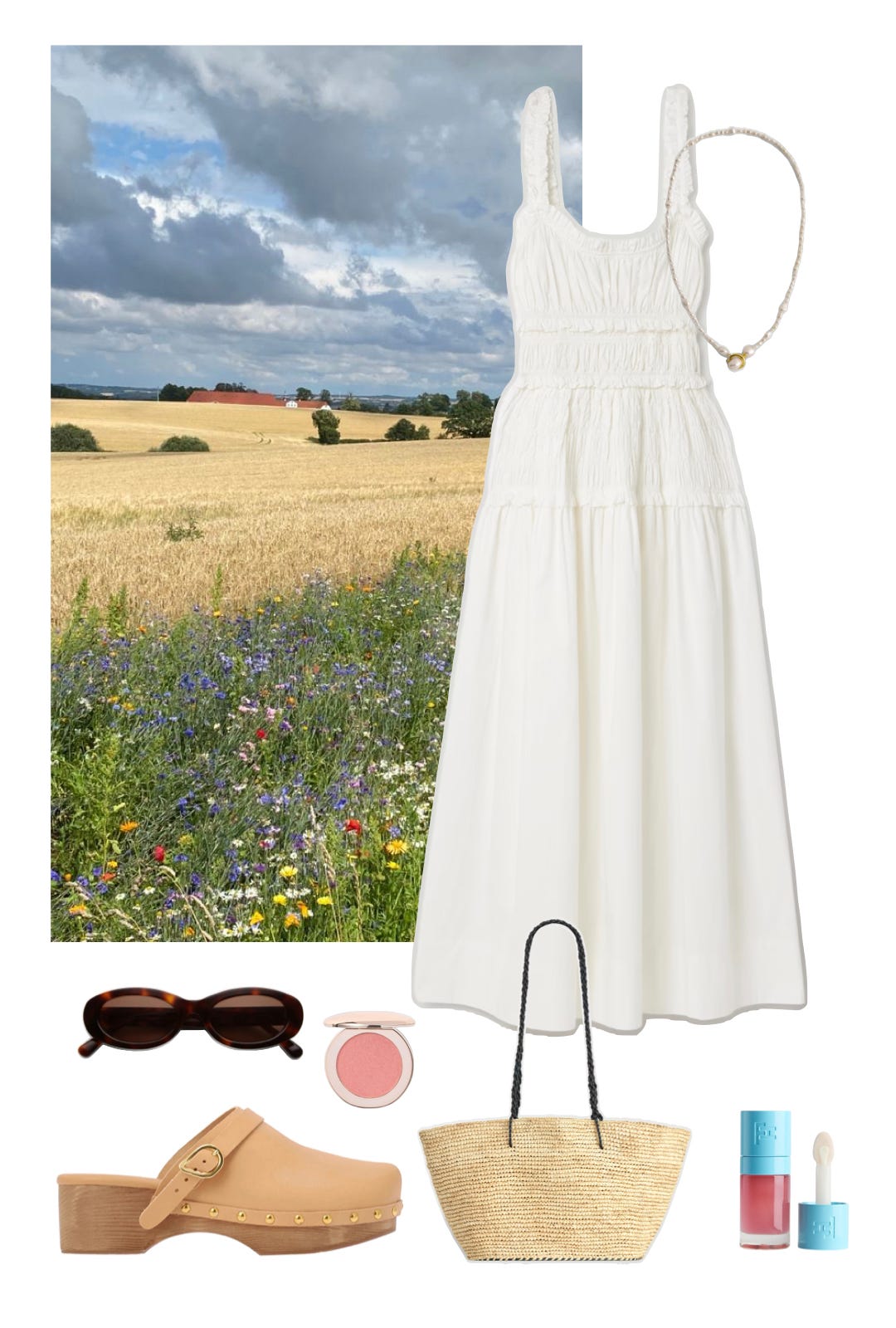
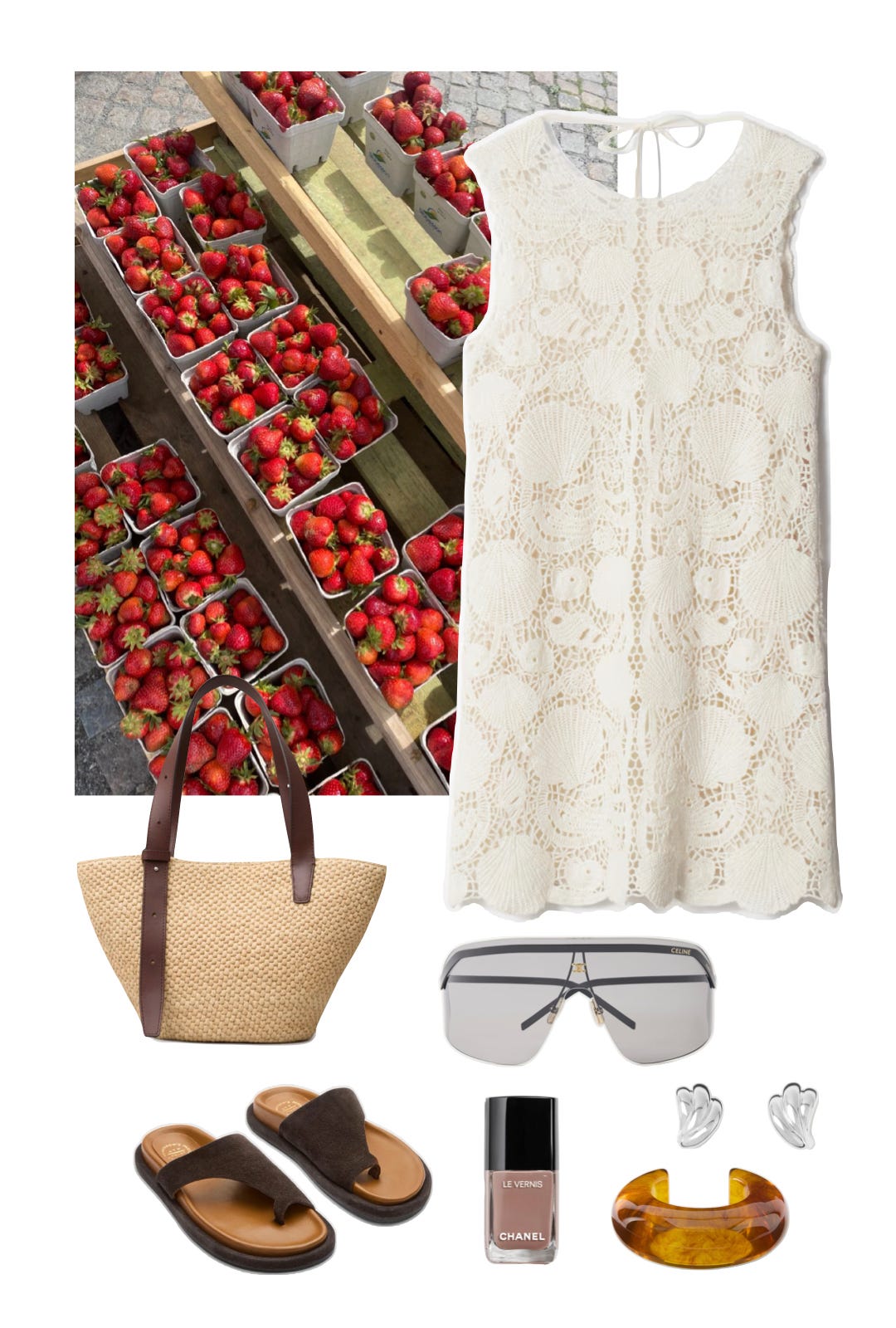
Around the table
This is, honestly, where Midsommar really delivers. Midsommar is about the food.
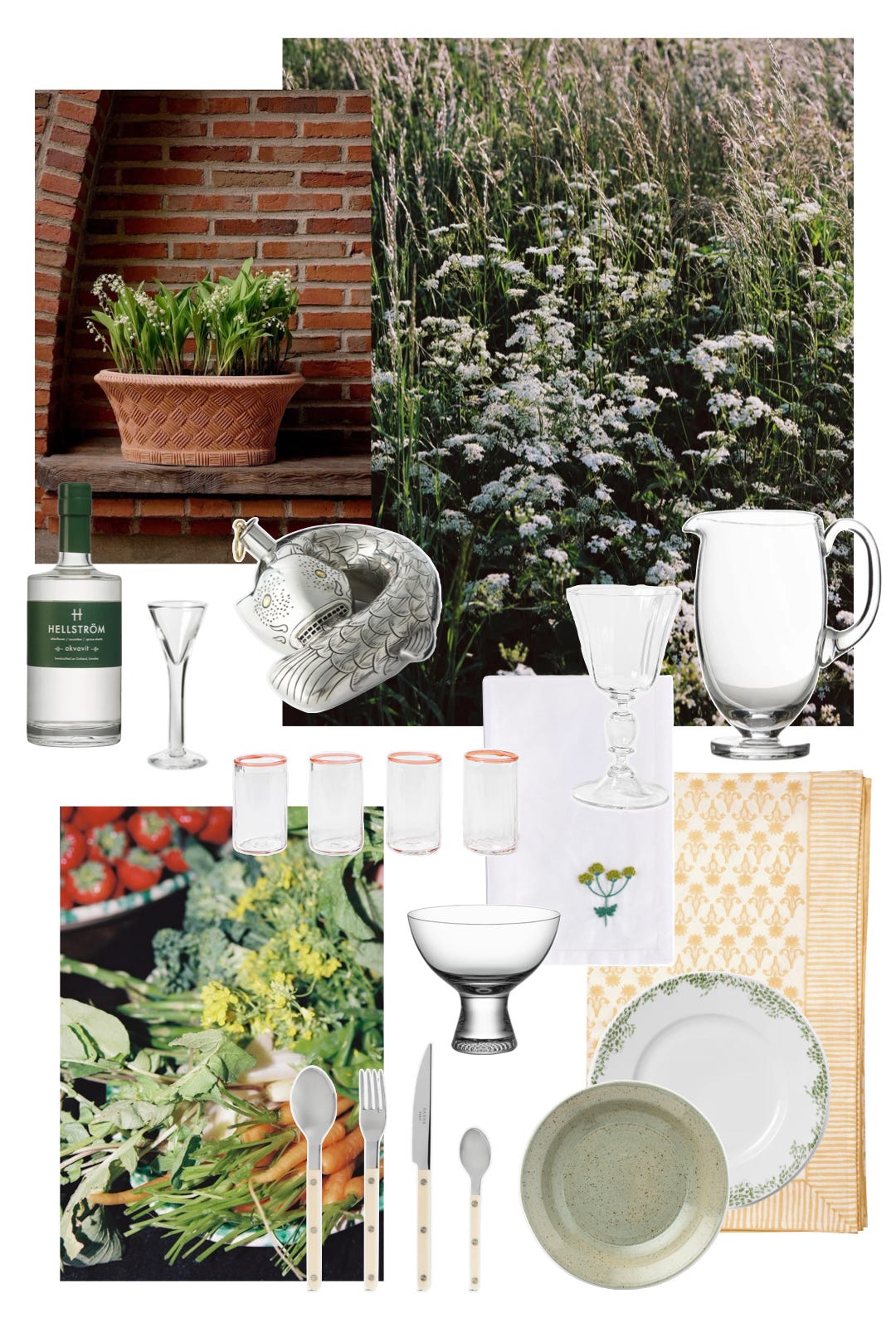
What I see in my mind’s eye when I think of Midsommar is a dinner table in the grass or under the roof of a raw barn. Wildflowers in small vases, nothing formal or arranged. Birch branches propped in corners of the room. A tablecloth. Simple glassware. Candles for later in the evening, even if it barely gets dark enough to need them (and it barely does, which is one of the most beautiful things about this time of year.)
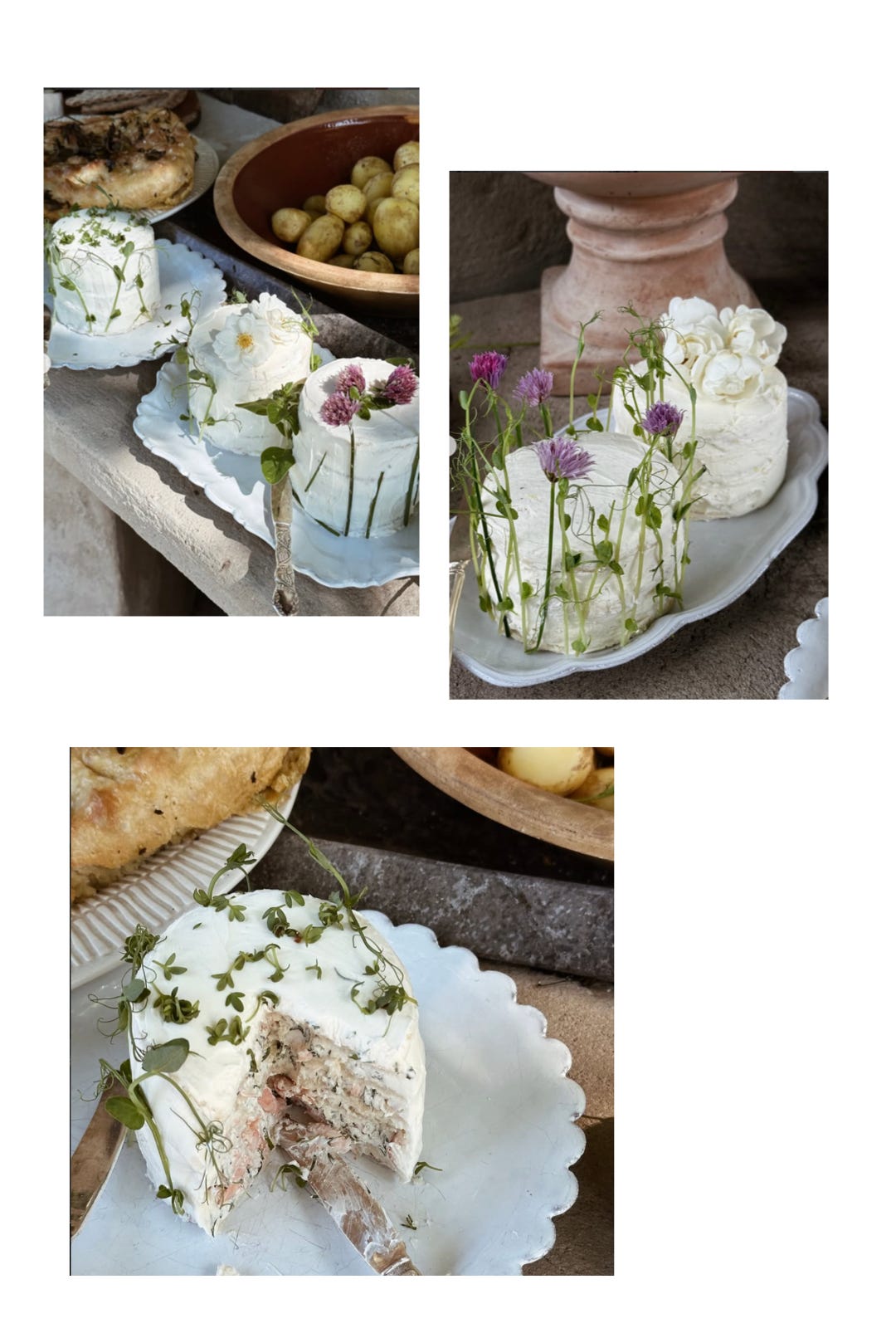
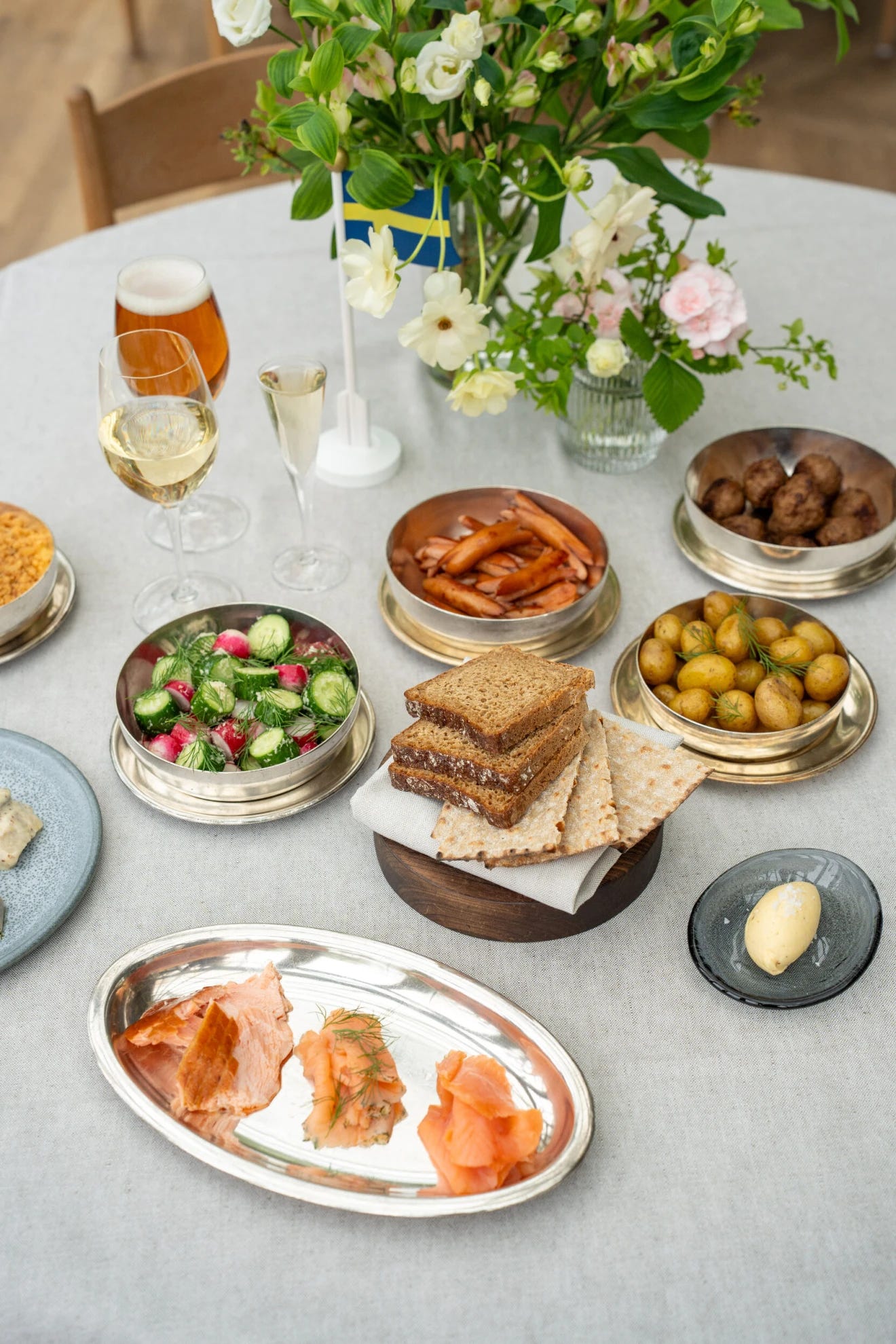
The food follows the same logic: seasonal, traditional and familiar without being complicated. Swedes have a thing for new potatoes with dill so this is a non-negotiable. Pickled herring in several varieties because everyone has a strong and slightly irrational opinion about which is their favorite. Gravlax. Eggs. Strawberries either as a cake or just separately with whipped cream or ice cream to finish.
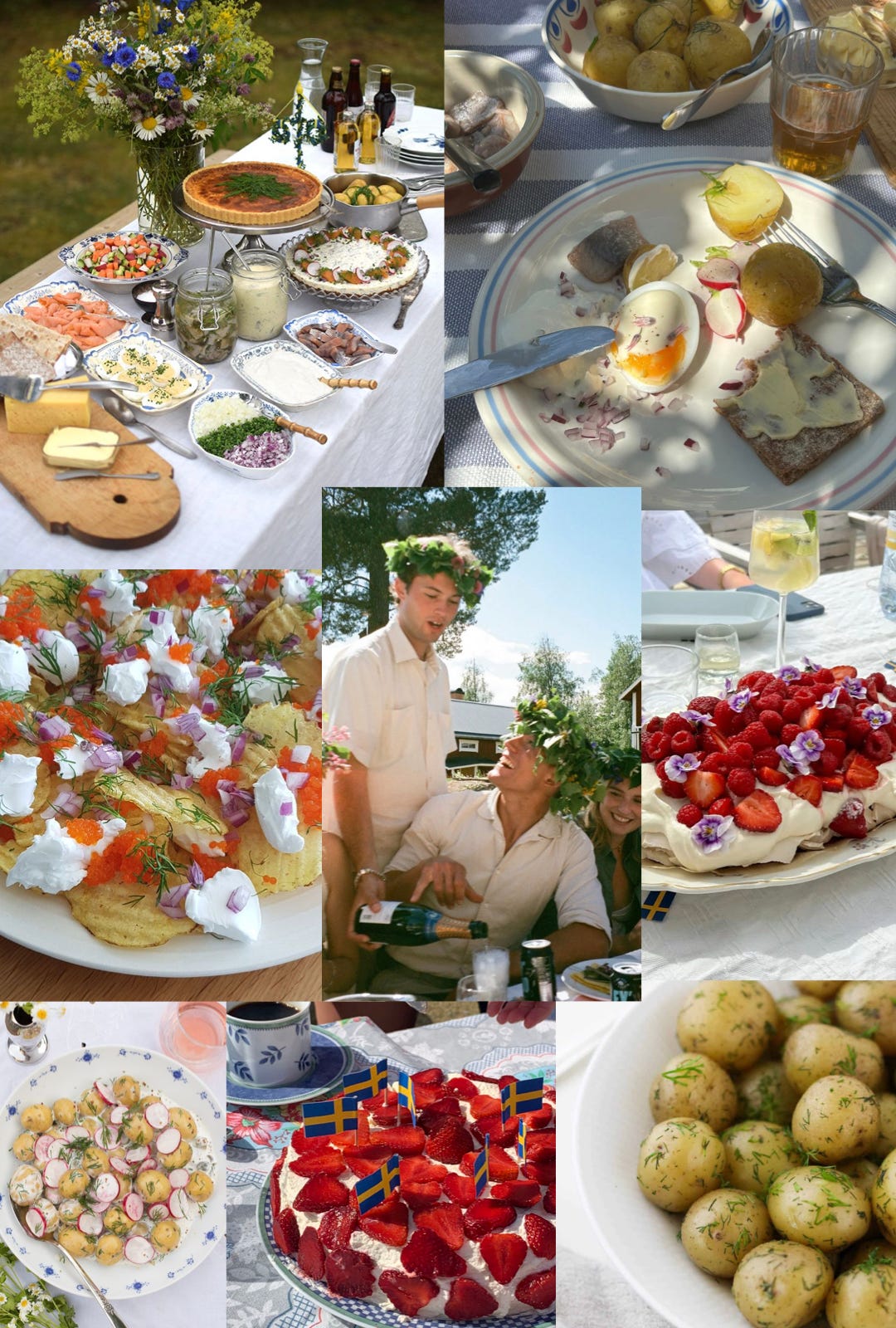
What’s special about celebrating Midsommar with friends is that it’s usually organized as a potluck, with everyone bringing something to share.
If you’re assigned strawberries, you’d better have a plan and a budget. Every year, it’s the same story: either the shelves at your local supermarket have already been cleared out, or the berry stands lining the streets are charging ridiculous prices for the last few cartons.
Nerd alert: The Swedish obsession with new potatoes at Midsommar runs deep. New potatoes – färskpotatis – are only available for a short window in summer, and their arrival has historically marked the true turn of the season. They’re smaller, thinner-skinned, and sweeter than stored potatoes, and they’re almost always served simply: boiled, with butter and dill, because nothing else is needed. The fact that they reappear at Midsommar every year feels less like a food tradition and more like a reunion with something you’ve been waiting for since last summer.
And then there are the drinks.
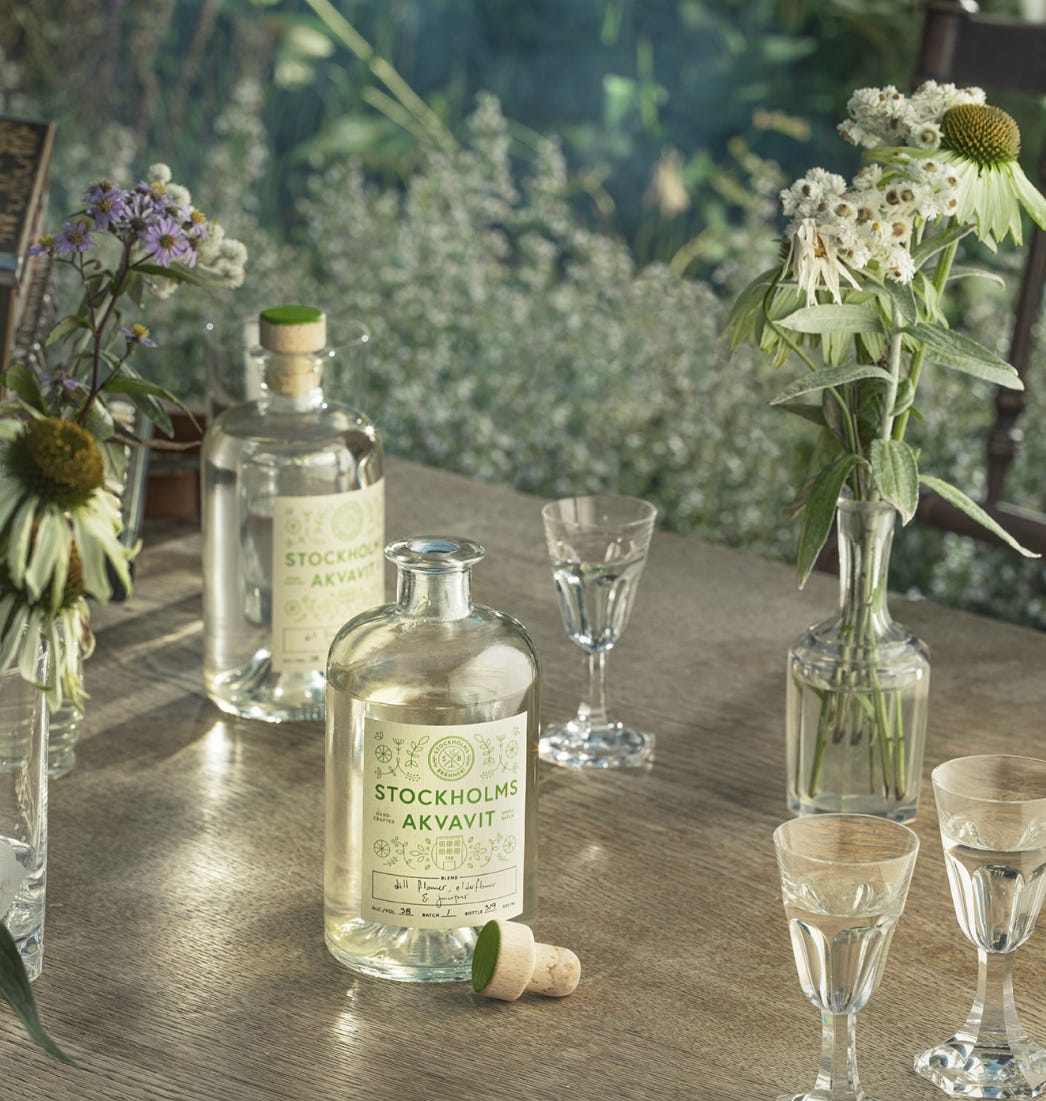
For many, Midsommar isn’t quite Midsommar without snaps. Traditionally, small glasses of aquavit are raised throughout the meal, usually accompanied by snapsvisor, the drinking songs (like Helan Går) that everyone somehow knows despite only singing them a handful of times each year.
These days, you’ll find plenty of alternatives on the table too. Beer, wine, non-alcoholic options and, perhaps most summery of all, fläderblomssaft. Elderflower cordial appears everywhere this time of year, served ice cold and tasting like Swedish summer in a glass.
When I saw Carole Bamford share a recipe recently, I immediately saved it. Now I'm in a staring contest with the elderflower bushes across the street, which seem determined to remind me every day that I should head out into the fields around Stockholm and pick some before the season is over.

Stockholm restaurants to celebrate at
If you happen to be in Stockholm over Midsommar and don’t have plans, Stockholm Stadshotell would probably be my first choice.
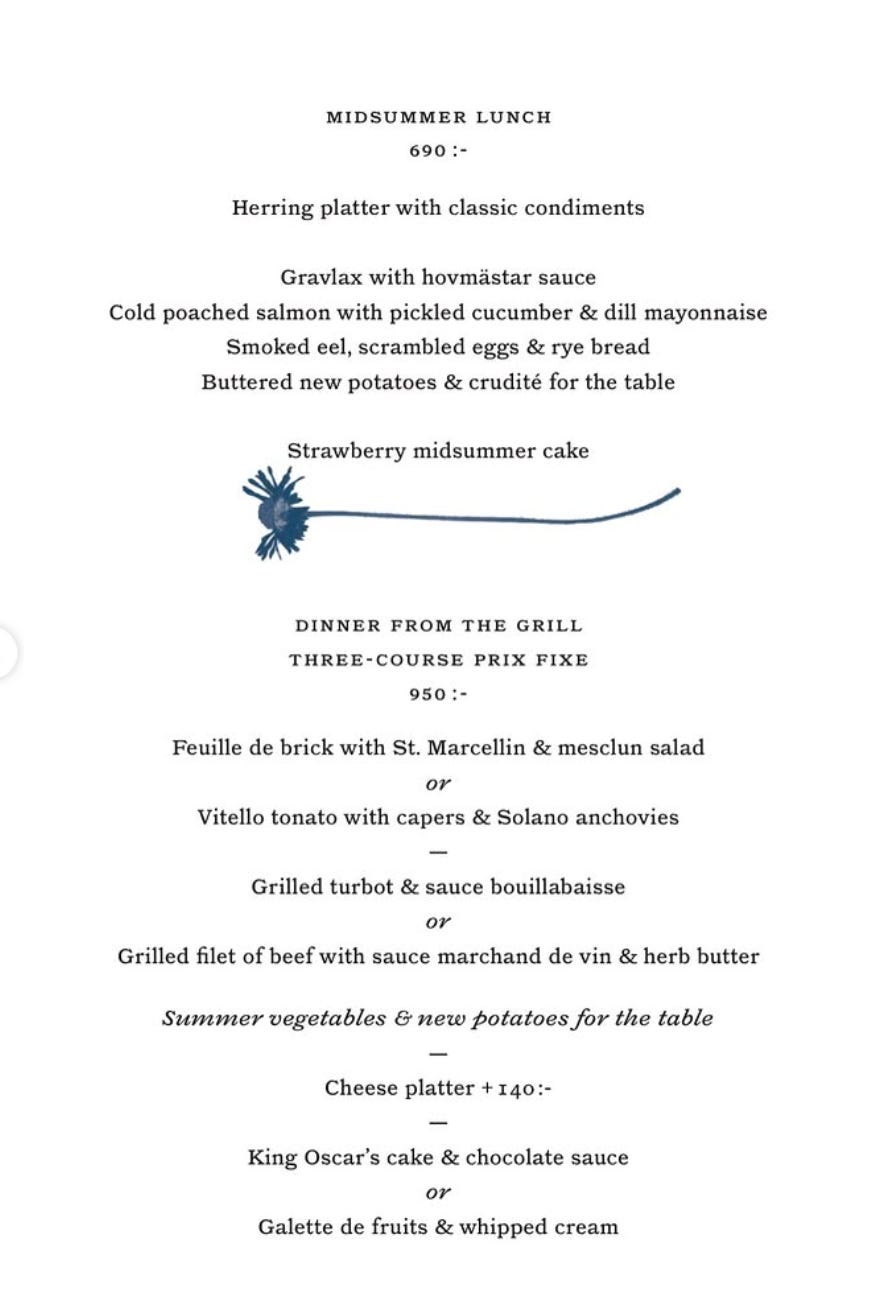
They’re hosting a traditional Midsommar lunch and a special dinner from the grill, with a midsommarstång in the courtyard, ice-cold snaps and plenty of singing. It will feel very Swedish, but without being overly formal or touristy.
For a more traditional celebration, Ulriksdals Värdshus is hard to beat. You’ll find the classics: a Midsommar buffet, dancing around the midsommarstång, accordion music and flower crowns, all in a beautiful setting just outside the city.
If you’re looking for something livelier and city-living, Riche’s annual Midsommarprakt has just what you need. Think flower-filled dining rooms, snapsvisor, classic Swedish summer dishes and a crowd that takes celebrating seriously.
All three offer very different versions of Midsommar, but each captures something special about how we celebrate the holiday.
The details
(The below contains affiliate links. More on that at the bottom.)
After Midsommar
By the time Midsommar is over, the feeling of vacation is near. The school year is done, people begin leaving the city, and Stockholm starts to feel different. There is less urgency. Fewer things on the calendar. Longer evenings. More time spent outdoors.
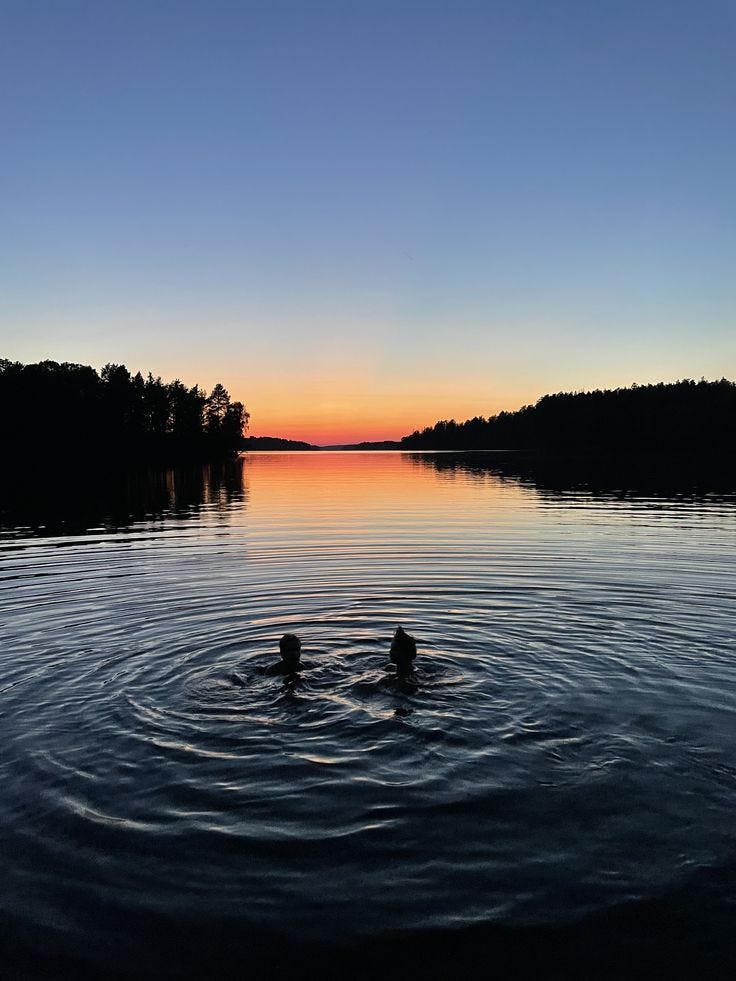
Ours might be a modest version of Midsommar. But right now, it’s exactly what’s right for us, and I’m sure I will look back on these years with fondness when the kids are grown.
And this time around, I won’t leave you with written words, but with two songs that, for many Swedes, are the definition of summer itself.
Sommarsången, written for Pippi Longstocking, and Idas Sommarvisa from Emil i Lönneberga. Both come from Astrid Lindgren’s (the author of Pippi Longstocking) world, where Swedish summers seem endless, children roam freely, and every day holds the possibility of adventure.
For many of us, these songs are tied to childhood, school graduations (my 9 yo sang Sommarsången this week at his end-of-term concert) and long summers that felt as though they would never end.
Wishing you a wonderful Midsommar next Friday. xA
A small note on affiliate links: some of the links in this post are affiliate links, meaning I may earn a small commission if you purchase through them, at no extra cost to you. I’ve been doing this for a couple of years now, and my approach hasn’t changed — I only ever share things I genuinely like and would use or wear myself. The smaller Scandinavian brands or retailers I highlight often don’t work with affiliate platforms at all, and I share them regardless.
If you’d like to see everything in one place, you can find it on my ShopMy.
Fun fact: I dated a Swedish guy years ago and he gave me my first sip of aquavit…which was also my last 😂 that drink is no joke!
Happy midsommar!
Such a pretty part of the world and I’d love to visit someday. I love your Substack as it’s part culture and not just pretty items like others. A perfect blend. Thankyou.